At 7:40 a.m., searching through six similar tubes can take longer than using the products you actually need. A large rotating organizer might display the whole collection beautifully, but the better solution for a short weekday routine may be one shallow tray and a small place for clean brushes.
Begin with the morning, not the container. Set out the products you used during an ordinary week, identify where you apply them, and measure the space they need. Organizing around that real sequence keeps a small drawer useful and makes it easier to notice when something no longer belongs.
The right organizer makes your current routine easier to see and clean; it should not create a reason to buy more makeup.
Separate daily, occasional, and unopened products
Clear the storage area onto a washable surface and group items by how they are used. Keep the daily routine together, occasional colors in a second group, and unopened backups apart. Put brushes that need washing in a clearly separate place. Avoid building a new arrangement around items you no longer use simply because their packaging matches.
Review the manufacturer's use and storage instructions. FDA explains that moisture, temperature changes, and exposure to sunlight or air can affect cosmetics. Remove products whose condition has changed and follow stated expiration or opening guidance where provided. Organization does not reset a product's usable life. A small opening-date note can help you follow the brand's instructions without relying on memory.
Measure the drawer's working clearance
Measure internal width, depth, and the clearance under the drawer opening. Include the tallest product in its intended position, and check whether the drawer closes with the organizer loaded. A tray that fits the empty cavity can still be too tall once bottles or brush handles stand inside it. Note any sloped sides, hinges, or runners that reduce the usable rectangle.
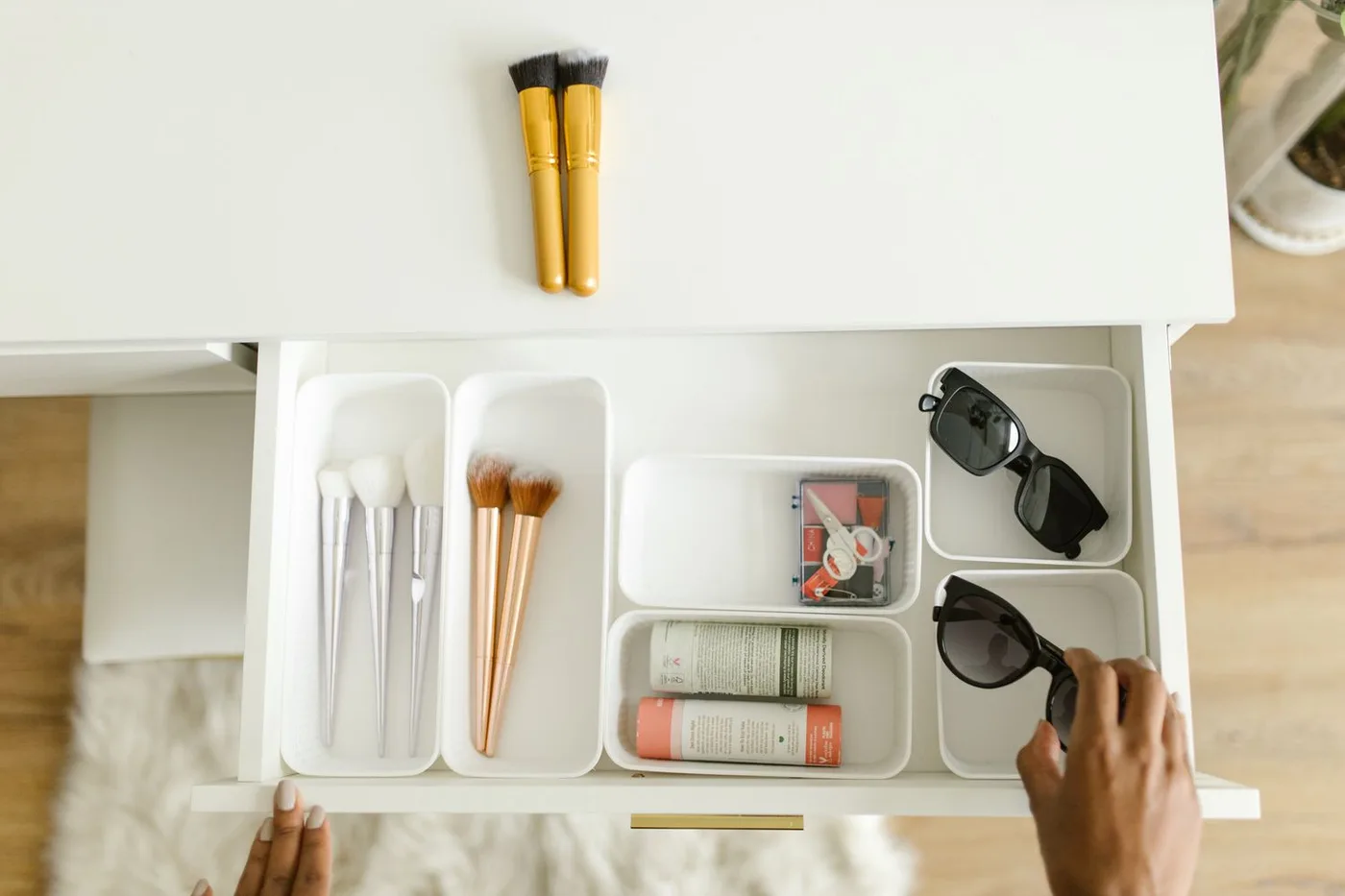
Arrange paper outlines before buying a full set. Leave enough finger space to remove a compact without lifting the tray. The Joseph Joseph Viva 12-piece drawer set is an example of modular compartments, but its official page specifies a minimum drawer height of 2.75 inches. That matters more than a photograph of a perfectly filled drawer. Your own layout may need only a few compartments.
| Storage type | Useful for | Watch for |
|---|---|---|
| Shallow drawer trays | A short daily routine protected from visual clutter | Internal height and finger access |
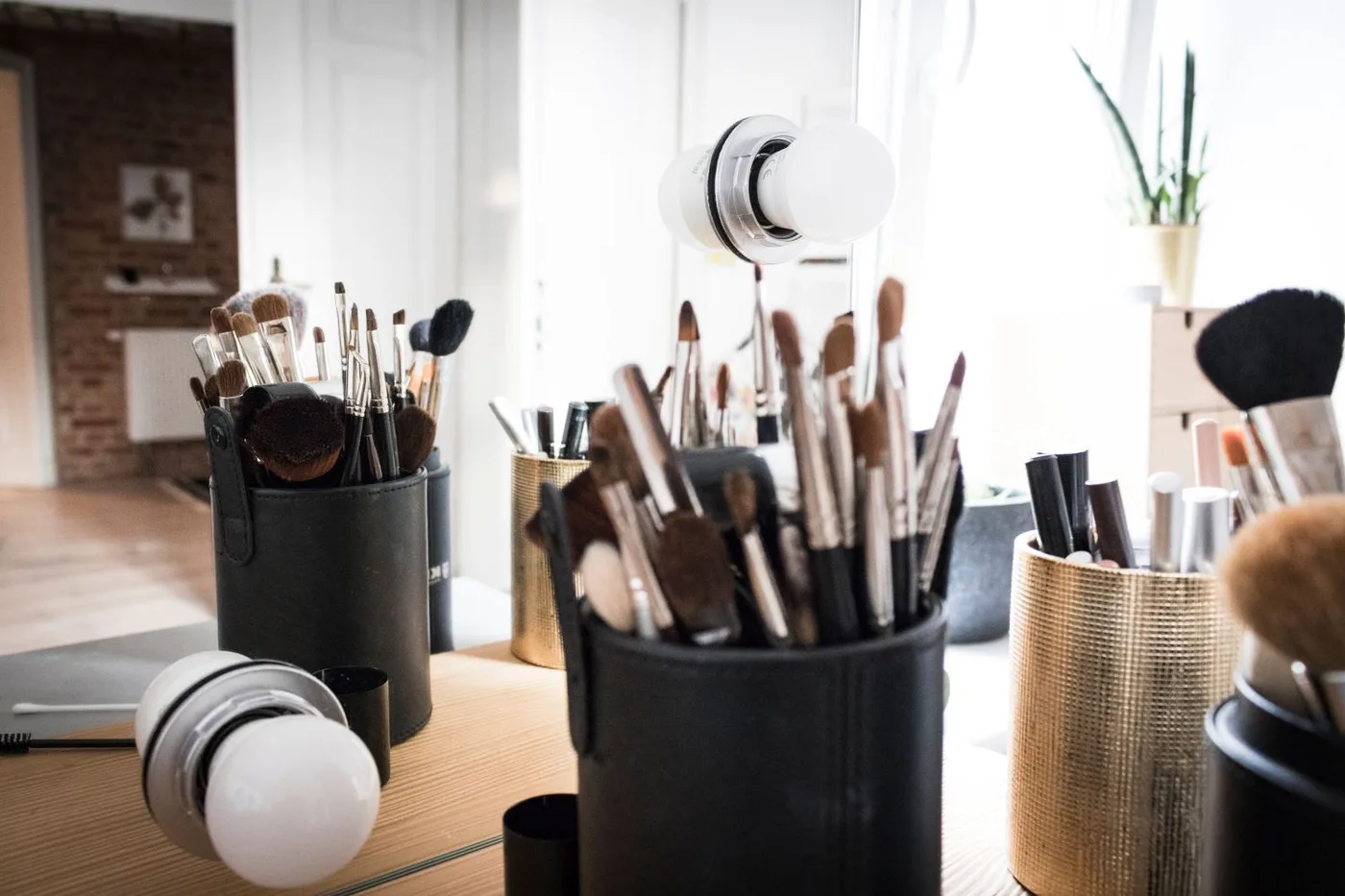
| Upright divided cup | Clean dry brushes and long pencils | Deep bases that collect residue |
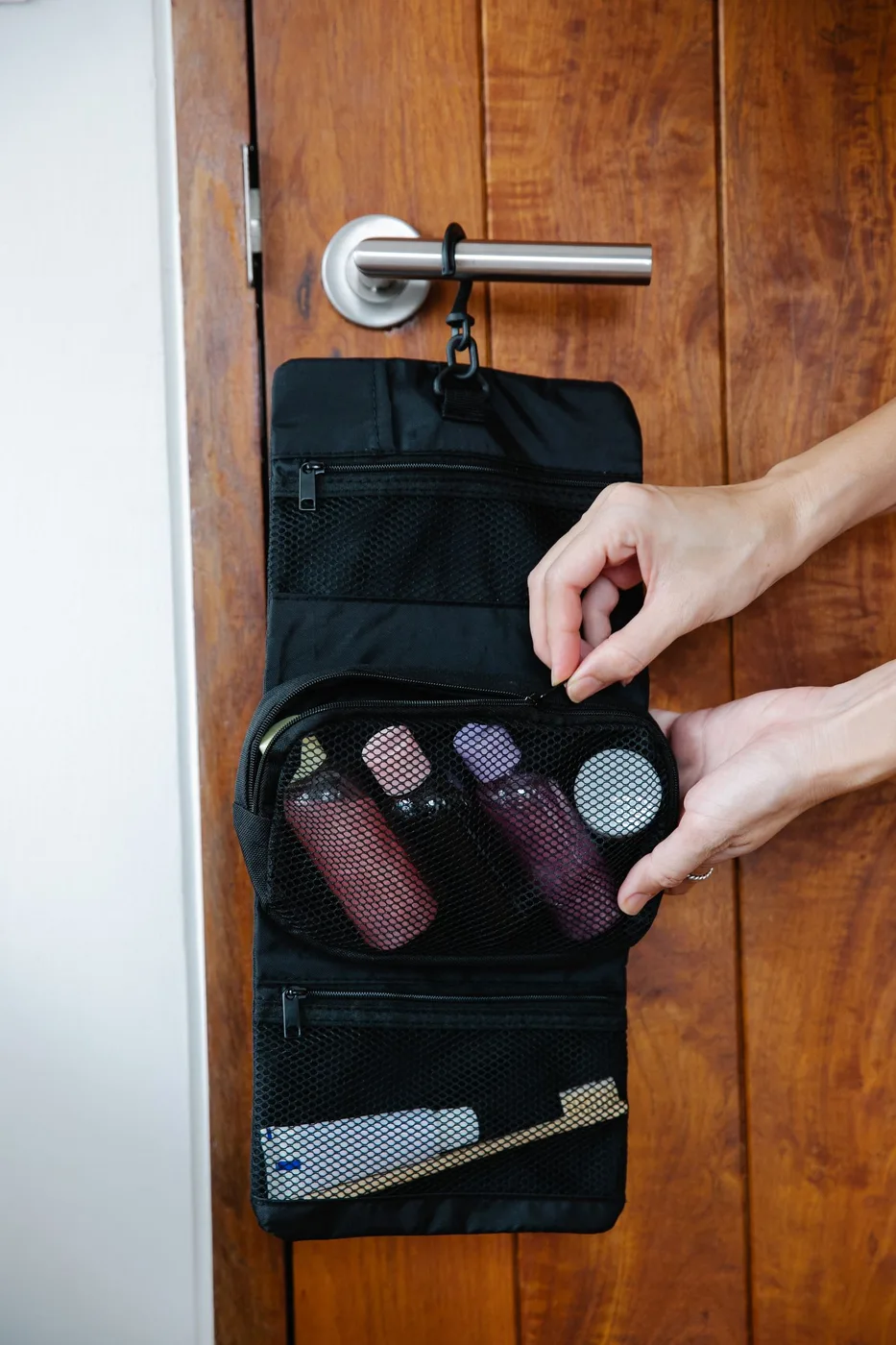
| Portable pouch | Getting ready away from the bathroom | Items hiding beneath each other |
| Countertop tiered organizer | A stable vanity with enough open surface | Sunlight, splash exposure, and cleaning around the base |
Create a sequence you can put back
Place the daily items in the order you normally reach for them, or group them by task if that feels more natural. Use one compartment for small tubes, one for compacts, and a longer section for pencils. Keep labels readable where practical. Identical unmarked containers can make the arrangement look calm while making the morning slower.
Give occasional items a separate bounded section rather than squeezing them between daily products. In a shared bathroom, a portable daily tray can let each person clear the counter after use. Keep personal tools identifiable and avoid treating an attractive shared brush cup as an invitation to use each other's makeup. A useful layout respects the household's actual boundaries as well as its available space.
Choose surfaces you can clean without dismantling everything
Look for removable compartments, accessible corners, and care instructions that suit the material. A decorative organizer with narrow permanent slots may be frustrating when powder gathers at the bottom. Check whether any parts can be removed, and do not assume a plastic tray is dishwasher-safe. Follow the manufacturer's cleaning method.
During a weekly reset, lift out the daily products, wipe the storage surface as directed, and let it dry before returning them. Clean spills when they happen so they do not transfer between packages. Keep brush washing as a separate job; a clean holder does not mean the brushes inside it are clean. Allow washed tools to dry completely before storage.
When to buy an organizer, and when to stop
Buy when a measured container fixes a specific problem: pencils rolling away, compacts piled over one another, or a daily routine moving between rooms. Modular trays are useful if the drawer changes over time. A portable pouch can work better when the place with the best light is a bedroom rather than the bathroom.
Skip the largest set if it fills every inch and leaves no comfortable access. Avoid buying storage for hypothetical future products, and do not replace sound packaging simply to create matching rows. If one existing washable tray holds the daily routine neatly, keep using it. Leave the storage a little less than full so putting an item back is an easy action.
Shopping notes
Use these options as a starting point, then check dimensions, current materials, care instructions, availability, and the retailer’s return policy before ordering.
Joseph Joseph Viva 12-piece Makeup Drawer Organizer Set
Consider it for: A modular candidate for a measured drawer that needs separate sections for compacts, pencils, and grooming accessories.
The tradeoff: The set needs adequate drawer clearance and may exceed a small routine's needs. Check dimensions and the current delivery area before ordering.
Explore at the official site External merchant link · no affiliate commissionYour questions, answered
Should makeup stay in the bathroom?
Follow each product's storage instructions and avoid unsuitable heat, moisture, and sunlight. If the bathroom is damp or crowded, a portable tray kept in an appropriate bedroom spot may be easier to manage.
Do I need a separate compartment for every product?
Usually not. Group by routine or product shape and leave enough room to pick items up. Too many tiny compartments can waste space and make cleaning slower.
How can I stop backups taking over?
Keep unopened backups in a separate small section and check it before shopping. One defined area makes duplicates easier to see without turning the everyday tray into a stockroom.
Sources & further reading
Product and care details were checked against the sources below on October 18, 2026. Our practical recommendations are editorial judgments, and a listed source does not imply endorsement.
- FDA: Shelf Life and Expiration Dating of CosmeticsChecked 2026-10-18
- Joseph Joseph US: Viva drawer organizer specifications and careChecked 2026-10-18