On a rainy Sunday, a folding rack can take over the only path between the kitchen and the bedroom. The solution is not necessarily a taller rack with more rails. It is a drying plan that accounts for where wet clothes hang, how long the space is occupied, and where the rack goes afterward.
For a small apartment, buy around a typical load of items that cannot go in your dryer, rather than the theoretical capacity of a full washing machine. A few shirts, workout tops, and one towel create a very different shape from a load of bed sheets. Published drying length is useful, but it cannot describe those differences by itself.
Measure both the open rack and its folded home; useful drying space includes room for air and people to move.
Map the full footprint before shopping
Measure the area with wings fully open and include the width of hanging garments. A rack's frame may fit a corner while shirt sleeves extend into a doorway. Tape a rough outline on the floor if helpful and walk around it carrying an empty laundry basket. Make sure doors, drawers, and essential routes remain usable.
Next measure the proposed storage gap. Check the rack's folded width, height, and depth rather than assuming flat means small. A model that folds behind a door still needs the door to open safely. If the rack is stored far from the washer, consider its empty weight and whether you can carry it comfortably.
Match the rails to the clothes
A wide wing rack works well for rows of smaller garments, but long trousers may hang too low. A tall tower can use less floor space, yet its interior rails can be awkward to reach once the outside is loaded. A wall-mounted design keeps the floor clear only if its mounting location and wall structure are suitable.
| Laundry pattern | Rack style to compare | Main limitation |
|---|---|---|
| Mostly shirts and short garments | Folding wing rack | Open wings need side clearance |
| Small items in a narrow room | Tower rack | Crowded inner rails can be inconvenient |
| Occasional delicate knitwear | Rack with a suitable flat-drying area | Do not stretch garments across unsupported gaps |
| Permanent laundry corner | Wall-mounted or retractable design | Installation, load limits, and access matter |
Allow air to reach the fabric
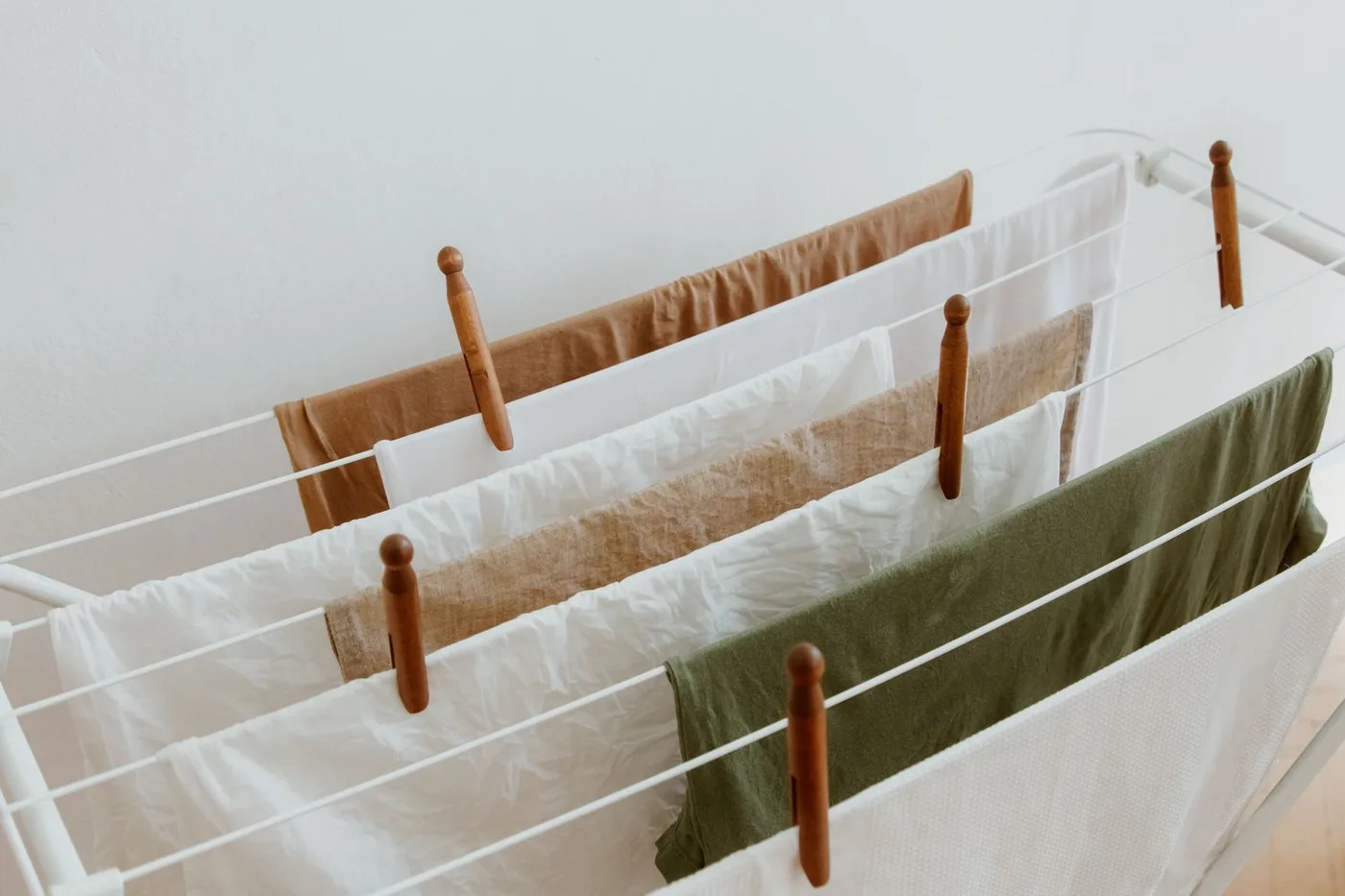
Hang garments with space between them instead of doubling several layers over each rail. Spread sleeves and reposition heavy seams when needed. For an item marked dry flat, use an appropriate supporting surface and follow its care label. A hanger is not an equivalent substitute if the garment can stretch under its wet weight.
Air-drying adds moisture to the room. EPA identifies moisture control and ventilation as important parts of preventing indoor mold. If windows develop condensation or the space stays damp, change the drying location or address the room conditions. Do not respond by squeezing another wet load onto the same rack. There is no universal drying-time promise for a rack.
Inspect the mechanisms and the surface underneath
Check how the legs lock open and where fingers could get caught during folding. Set the rack on a level surface before loading it. Keep it out of children's play routes and away from heaters or an open flame. Never improvise a drying arrangement by draping fabric over equipment that is not intended to support it.
Look at the ends of rails and feet. Exposed rough points can catch delicate fabric, and a rack should not rock on your flooring. If drying damp garments over a moisture-sensitive floor, manage drips appropriately without creating a slipping hazard. A protective surface must not become a wet layer forgotten beneath the rack.
Buy capacity you can use without crowding
Brabantia's HangOn listing describes adjustable wings and hanger hooks, which are features worth comparing if you regularly dry shirts alongside smaller pieces. The relevant question is whether those hanging positions work for your clothes, not how many theoretical loads a manufacturer describes. Look at the open dimensions and the product manual.
A compact rack may be enough when most laundry goes into a dryer. Skip a large tower if you will only use two rails, and skip a tiny rack if long items always drag. If you wash in a shared laundry room, plan the return trip with damp items before selecting a rack that lives in another room.
Try a modest load first and note which items remain damp longest. Adjust spacing and timing before adding another rack. The purchase succeeds when it makes laundry manageable while preserving the use of your home.
Shopping notes
Use these options as a starting point, then check dimensions, current materials, care instructions, availability, and the retailer’s return policy before ordering.
Brabantia HangOn drying rack, 25 meters
Consider it for: Compare its adjustable-wing layout if your loads mix small items and hanging shirts.
The tradeoff: A generous drying length still needs an open floor area; check dimensions and folded storage carefully.
Explore at the official site External merchant link · no affiliate commissionIKEA drying racks — merchant category
Consider it for: Useful for comparing simpler folding racks and small-item hanging options.
The tradeoff: The category includes different load limits and installation types. Review each item’s instructions before choosing.
Explore at the official site External merchant link · no affiliate commissionYour questions, answered
Can I dry a whole load on a small rack?
Only if the garments fit with useful spacing. A small load of socks differs from a load of sheets; do not use the washer drum size as a rack-capacity guarantee.
Should I put the rack beside a radiator?
Follow the rack, garment, and heater instructions and keep required clearances. Do not rest clothing on a heater or create an improvised drying setup.
Why do clothes still feel damp the next day?
Crowded fabric, heavy seams, and humid room conditions can all matter. Increase spacing and address ventilation or moisture rather than buying capacity alone.
Sources & further reading
Product and care details were checked against the sources below on October 18, 2026. Our practical recommendations are editorial judgments, and a listed source does not imply endorsement.
- Brabantia HangOn specifications and featuresChecked 2026-10-18
- EPA: Ten Things You Should Know about MoldChecked 2026-10-18