Imagine replacing sheets in a small apartment where the bedroom also serves as a home office. The bed is made quickly in the morning, laundry happens on Sunday, and ironing pillowcases is unlikely. A fabric that looks immaculate in a product photograph may feel like extra work in that room.
Start with the texture you already enjoy. Crisp, smooth, softly textured, and brushed are useful descriptions; 'luxury' is not a fabric. Then narrow the choice by care requirements, fit, and replacement pieces. Our comparisons are shopping guidance based on labels and construction, not personal sleep trials or promises about temperature.
Choose a fabric you like touching and can wash conveniently; verify mattress depth before paying for a whole set.
Separate the fiber from the weave
Cotton and linen describe fibers; percale and sateen describe woven constructions. A cotton sheet can therefore be either percale or sateen. This matters when two packages both say cotton but feel noticeably different. Read the material breakdown rather than assuming a familiar weave name guarantees a particular fiber or finishing process.
Percale is a straightforward starting point if you like a crisp woven surface. Sateen is worth considering if a smoother drape appeals to you. Linen has a more visibly textured, relaxed appearance. These are general shopping distinctions, not guarantees about every product. Fabric weight, yarn, finishing, and your own bedding layers also affect the experience.
Compare the work as well as the feel
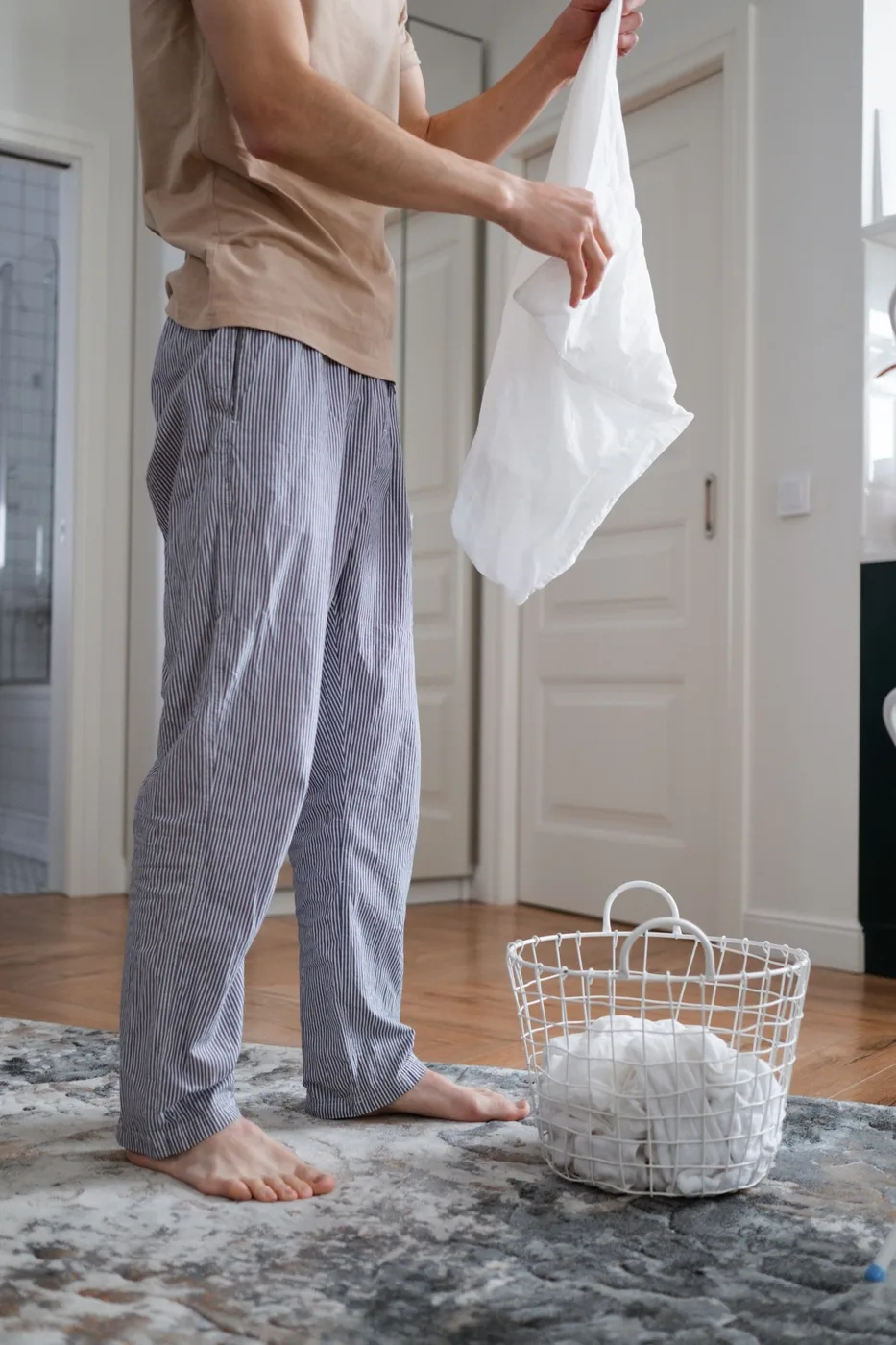
The sheet set needs to fit the laundry system you have. Someone using a shared laundry room may value a manageable load and quick folding more than decorative detailing. A household with a large linen cupboard may be comfortable rotating several sets. Choose the material that supports your routine rather than building a more complicated routine around it.
| Option | Useful starting point | Tradeoff to consider |
|---|---|---|
| Cotton percale | A crisp woven feel | A pressed appearance may require extra care |
| Cotton sateen | Smooth drape and a subtle sheen | Texture preference is personal; inspect snags and care |
| Linen | A relaxed, visibly textured bed | Higher initial cost can be hard to justify without a sample |
| Cotton blend | A specific balance of care and feel | Fiber percentages vary; read the full label |
| Brushed fabric | A cozy surface for cooler rooms | May feel too substantial for your preference |
Measure the mattress as it is used
Measure mattress length, width, and depth with any topper and protector in place. A fitted sheet sized only to the bare mattress may pull free once extra layers are added. Check the maker's stated pocket depth and elastic design. A deep-pocket label without actual dimensions is not enough information for a confident purchase.
Check what the package includes. Some sets contain a fitted sheet, flat sheet, and pillowcases; other bundles omit the flat sheet or use different pillowcase sizes. IKEA's listed DVALA queen set gives explicit component dimensions. Use that level of detail when comparing any brand. A lower sticker price may simply reflect fewer pieces.
Read material claims literally
The FTC explains that textile labels identify fiber content, country of origin, and the responsible business. Use the fiber line as a concrete checkpoint when broad terms such as natural or silky dominate the sales copy. Those terms do not tell you whether the sheet is cotton, rayon, polyester, or a mixture.
Thread count alone cannot tell you whether you will like a sheet. Avoid choosing a set solely because one number is larger. Look for clear materials, dimensions, washing instructions, and a return policy that explains what happens after opening or washing. If samples are available, a small swatch can be more informative than buying multiple complete sets.
Build a bed without buying a whole new collection
If your fitted sheet is worn but the pillowcases are sound, replace the fitted sheet first. Coordinated neutrals make this easier, while highly specific seasonal patterns can be difficult to match. Check whether the brand sells individual pieces before committing to a range you expect to use for several years.
For a first purchase, buy one set and use your existing set as the backup. Follow the care instructions and see how the fabric fits after laundering before ordering more. Do not interpret an initial showroom feel as proof of long-term comfort. Finishes and presentation can influence first impressions; your own routine is the useful decision point.
Spend extra only for a feature that answers a real need: a depth that stays put, a texture you already enjoy, or individual replacement pieces. Skip expensive fabric changes if the actual problem is an ill-fitting duvet or a room that needs different bedding layers. Sheets are one part of the bed, not a guarantee of better sleep.
Shopping notes
Use these options as a starting point, then check dimensions, current materials, care instructions, availability, and the retailer’s return policy before ordering.
IKEA DVALA queen sheet set
Consider it for: A clearly specified cotton set to compare when you want basic pieces with published dimensions.
The tradeoff: Check the fitted depth against your topper and protector; the listed set may not suit a particularly deep mattress.
Explore at the official site External merchant link · no affiliate commissionIKEA sheets — merchant category
Consider it for: Browse different sheet constructions and individual sizes from one official retailer.
The tradeoff: Items in a category differ in fiber mix and included pieces; compare each material and care panel.
Explore at the official site External merchant link · no affiliate commissionYour questions, answered
Is percale a type of cotton?
Percale is a weave. Read the fiber label separately to learn what the fabric is made from; the weave name alone is incomplete.
Should I buy the highest thread count I can afford?
No. Prioritize fabric feel, mattress fit, clear care instructions, and useful component sizes. A higher number does not resolve those practical questions.
How many sheet sets do I need?
Two usable sets are a practical starting point for one regularly used bed: one on the bed and one available during laundry. Add more only for a specific routine.
Sources & further reading
Product and care details were checked against the sources below on October 18, 2026. Our practical recommendations are editorial judgments, and a listed source does not imply endorsement.
- FTC: Apparel and LabelingChecked 2026-10-18
- IKEA DVALA component dimensions and cotton materialChecked 2026-10-18